AUGUST 2026 NEWSLETTER
A Note from the New Director
By Joshua Goodwin
Working for Legal Aid over the last 18 years, my focus has been helping low-income Ohioans. I’ve seen poverty in Ohio’s most rural counties as well as in the heart of Columbus. I’ve worked with families facing eviction, dealing with domestic violence, and struggling to navigate the public benefits system. I've watched clients persevere through the Great Recession, the foreclosure crisis, and the economic disruptions of the pandemic. From this, I gained a deep respect for the grit and resilience of the people I served. It was eye-opening, humbling, challenging, frustrating, and unbelievably rewarding work.
ALSO IN THIS ISSUE:
Congress Enacts 21st Century Road to Housing Act | OPLC Joins Legal Aid Partners in Comments to the Centers for Medicare & Medicaid Services | OPLC and Legal Aid Partners Submit Lead Comments
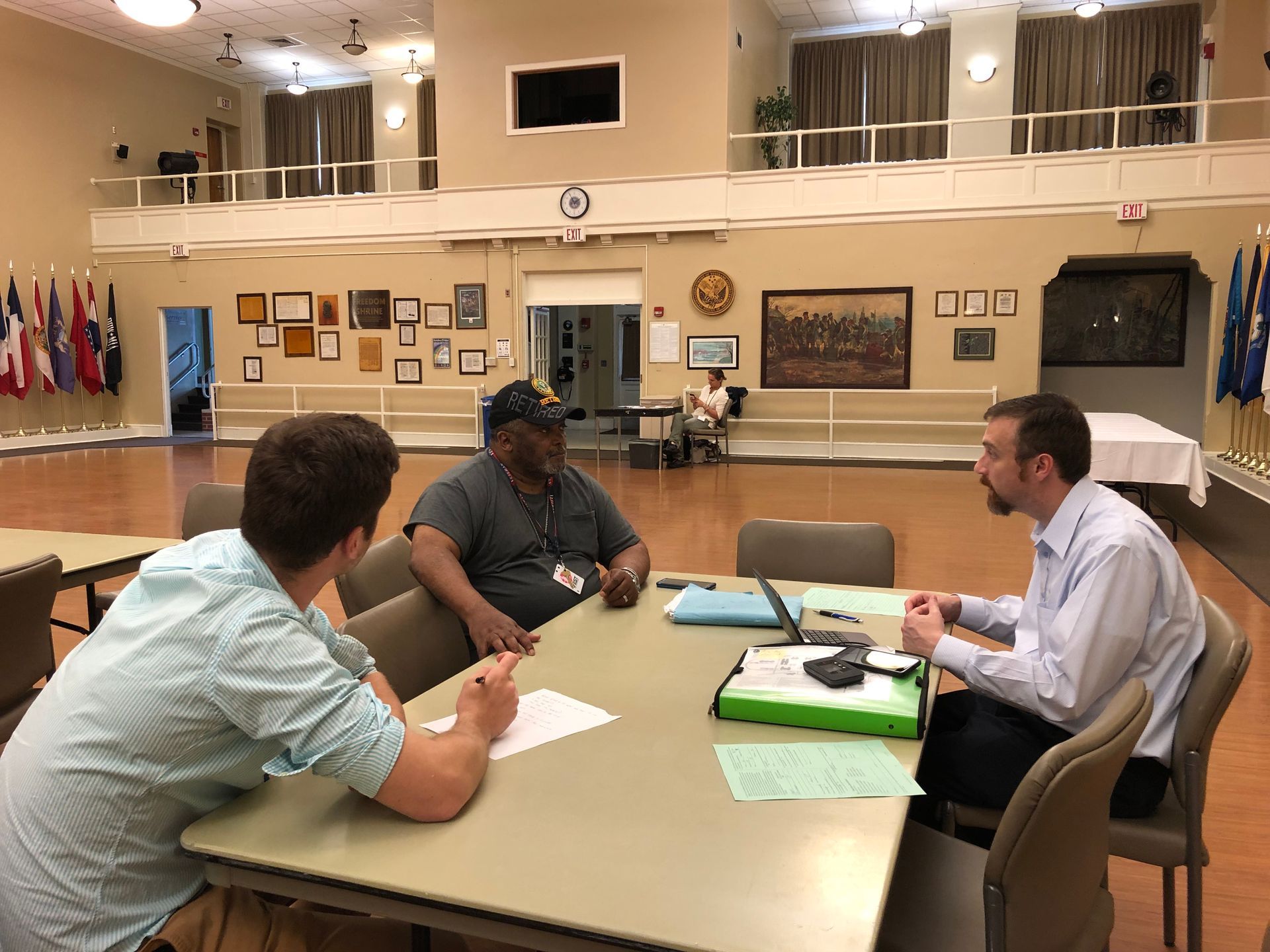
I also saw how decisions made at the Statehouse impact Ohioans in both positive and negative ways.
I came to OPLC because of the organization’s commitment to advancing policies that expand opportunity for the Ohioans I've spent nearly my entire career serving. By working with Ohio’s legal aid programs, community partners, and people impacted by policy decisions, OPLC can advance practical solutions that improve economic security and strengthen access to justice.
And the folks we’re advocating for need to see positive change. Families across Ohio continue to face significant challenges. Rising housing, food, and health care costs have made financial stability harder to achieve. For too many people, a pathway out of poverty seems all but non-existent.
As unsettled as things may feel, I’m an optimist. Change is possible. Working together, we can create better days—where people experiencing poverty can see a path forward and have the support they need to follow it.
I hope you will reach out. I would welcome a chance to meet with you. Whether you're a community partner, advocate, policymaker, supporter, or someone with lived experience navigating these challenges, your voice matters.
Congress Enacts 21st Century Road to Housing Act
By Zack Eckles
The 21st Century Road to Housing became the most significant federal housing legislation in decades when Congress enacted it July 11. Although President Trump declined to sign the bipartisan legislation, it became law when he declined to veto the bill within 10 days of receiving it.
The legislation is a collection of separate bills introduced by Republicans and Democrats that aim to increase access to housing and homeownership. There are provisions intended to encourage home building, create new federal housing programs, reform existing housing programs, and add restrictions to private equity firms’ ability to purchase single family homes. You can find more detailed information about what’s in the bill
here, but some of the highlights include:
Sec. 202 – Whole-Home Repairs Act
- Creates a Housing and Urban Development (HUD) pilot program to support state, local, and tribal whole-home repair programs, which provide grants and forgivable loans to homeowners and landlords for repairs and modifications.
Sec. 301 – Housing Supply Expansion Act
- Eliminates the permanent chassis requirement for manufactured homes and requires HUD to establish minimum energy efficiency standards for them.
Sec. 303 – Property Improvement and Manufactured Housing Loan Modernization
- Increases limits for FHA-insured manufactured housing loans and adds the construction of accessory dwelling units as an acceptable use for FHA-insured property improvement loans.
Sec. 304 – PRICE Act
- Reauthorizes Preservation and Reinvestment for Community Enhancement (PRICE) grants for seven years to fund the repair, preservation, and improvement of existing manufactured homes and communities.
Sec. 405 – Choice in Affordable Housing Act
- Aims to reduce delays in HUD inspections by allowing units financed through certain federal programs—the Low-Income Housing Tax Credit (LIHTC), the HOME Program, and the USDA Rural Housing Service—to automatically meet Housing Choice Voucher (HCV) inspection requirements if they have passed an inspection within the past year.
- Allows new landlords to request advance inspections.
Sec. 1001 – Homes Are for People, Not Corporations
- Restricts the purchase of new single-family homes by large institutional investors that directly or indirectly own at least 350 single-family homes.
- Provides exemptions for certain entities, including large institutional investors seeking to purchase or build new single-family homes specifically for the rental market.
OPLC Joins Legal Aid Partners in Comments to the Centers for Medicare & Medicaid Services
By Danielle DeLeon Spires
OPLC joined our statewide partners in providing comments on July 31 on the Centers for Medicare & Medicaid Services (CMS)
rule regarding the implementation of the Group VIII Medicaid work requirements that will go into effect no later than January 1, 2027.
In addition to OPLC, the following organizations signed on to comments to share our concerns with the rule provisions that will jeopardize coverage: Advocates for Basic Legal Equality, Community Legal Aid Services, Disability Rights Ohio, Legal Aid of Southeast and Central Ohio, Legal Aid Society of Cleveland, and Legal Aid Society of Greater Cincinnati.
Comments focused on the following provisions of Interim Final Rule (IFR):
Definition of “medically frail”
- This additional requirement will also significantly increase administrative complexity and costs. By requiring states to determine not only whether an individual falls within a significantly narrower definition of medical frailty, but also whether their condition(s) significantly impairs their ability to comply with community engagement requirements, the IFR creates a more subjective and documentation-intensive process.
5-year limit on the Substance Use Disorder “SUD” exception
- The IFR recognizes that SUD is a chronic condition that impairs a person’s ability to work. While the rules exempt people with a SUD from the community engagement requirement, it limits the protection to no more than 5 years. This fails to reflect the reality of addiction and recovery.
The provisions will place substantial burden on individuals, creating barriers to accessing health care and severe coverage loss for vulnerable Ohioans and leading to increased costs for the state.
OPLC and Legal Aid Partners Submit Lead Comments
By Tim Johnson
OPLC, along with Advocates for Basic Legal Equality and the Legal Aid Society of Cleveland, submitted public comments on proposed rule changes for lead poisoning prevention. The Ohio Department of Health (ODH) is proposing a series of changes to comply with guidance from the U.S. Environmental Protection Agency as well as address the loss of funding in the most recent state operating budget. OPLC and our legal aid partners divided our comments into three categories.
First, we supported ODH’s recommendation to formally acknowledge that any level of detectable lead dust in a home constitutes a hazard for Ohioans. We also supported lowering lead action levels, which would allow for resources and lead clearance activity to take place before more lead hazards collect in the home.
We also offered comments that supported adding a disclosure statement at the end of a lead clearance examination. Currently, there is no additional information provided after a home has passed a clearance examination for lead hazards, even if there may be a small amount of lead dust still present. The proposed disclosure statement would inform families that, even when lead dust levels are low enough to pass a clearance examination, any amount of lead dust—including levels below reporting thresholds—poses a lead hazard. The disclosure statement will also include tips to help control any remaining lead hazards.
Finally, we addressed proposed increases in laboratory and lead licensure fees. ODH has not increased any of its fees related to lead since 1994. We acknowledged the need for increased fees, especially considering the loss of state funding. However, the fee changes were significant, with many increasing by more than 300% and some by more than 1,000%. Fee increases of this magnitude could make it financially impossible for many contractors to continue working in lead poisoning prevention. It might also prompt the Ohio General Assembly to take the ability to adjust fees away from ODH and instead put those fees into the Ohio Revised Code. This would make increasing the fees in the future extraordinarily difficult if not impossible. We urged ODH to consider more reasonable fee increases.
The comments were submitted as part of an informal comment process. ODH will review our comments along with all the others and revise the rules in accordance with the feedback received. Once the revised rules are drafted, the comments will be officially released to the public where they will go through a more formal comment period before becoming a part of Ohio’s Administrative Code. Currently, there is no announced date when the revised comments will be released, but OPLC will keep you updated.